

 Loading...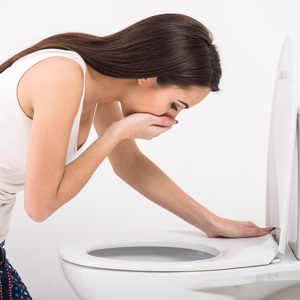
Have you ever experienced nausea? Who hasn’t? It’s a terrible feeling. It can be brought on by vertigo or medications. Cancer chemotherapy drugs are notorious for triggering unrelenting nausea and vomiting. Some other contributors include motion sickness, morning sickness, migraine headaches, gastroenteritis, appendicitis, anesthesia, food poisoning and intestinal obstruction. Anti-nausea drugs don’t always work. There is a surprising home remedy as close as your medicine cabinet: a sniff of alcohol. Knowing the right acupressure point can also do wonders.
Combating Post-Operative Nausea without Drugs:
Q. When I felt nauseated after surgery, the post-op nurse ran to grab a vomit bag while my partner, a massage therapist, grabbed my arm and started rubbing the acupressure point just above my wrist. My nausea stopped immediately.
The nurses turned to him and said, “What did you do?” He showed them the acupressure point and explained how it works.
Since I was feeling better, they left and came back later saying they’d tried it with other post-op patients. It had worked for everyone. Weeks later, we received a handwritten note from the nursing staff, thanking my partner for teaching them about this technique and telling us they were using it regularly with patients.
A. Thank you for this great story! We have heard previously of people using acupressure on a point near the wrist to quell nausea from motion sickness or morning sickness. Some sources refer to it as Neiguan or P6. To find it, place three fingers on the inner arm, starting at the wrist. The spot under the third finger, between the two tendons, is the acupressure point. We appreciate you pointing out that it might be helpful for post-operative nausea.
Others have shared a different remedy for this unpleasant reaction to anesthesia.
One reader wrote:
“I am always severely ill after anesthesia, even with antinausea medicine. A surgical nurse had me smell alcohol wipes, and the nausea went away almost immediately. I was stunned, and so was my husband. It still works for me if I’m feeling nauseated.”
Scientists have actually studied a sniff of alcohol to overcome nausea. The most recent trial we found may also be the most exotic.
The investigators conclude:
“There was no difference in the proportion of nausea improvement between ondansetron and IPA in helicopter emergency medical services patients.” (Air Medical Journal, Nov-Dec. 2024). In this quote, IPA stands for isopropyl alcohol aromatherapy; ondansetron is a strong prescription antinausea medication.
Alcohol Aromatherapy vs. Drugs for Nausea:
Home remedies usually get short shrift from health professionals. That’s because they are rarely studied in a scientific manner. Without a plausible explanation, many physicians may attribute these old wives’ tales to the power of suggestion.
Medications are usually perceived as real medicine. An FDA green light is tantamount to a medical seal of approval. But sometimes a home remedy may work as well or better than a prescribed medication.
OK, we admit that such a statement seems heretical. Let’s look at the both experience and science.
A Sniff of Alcohol For Nausea After Anesthesia:
This health professional believes a sniff of alcohol can be helpful:
Q. Today I noticed the comment about smelling alcohol as a treatment for nausea. I practiced anesthesia for 42 years and was Clinical Director of Adult Post Anesthesia Units (PACU) for 8 years at my last hospital.
Very early in my career I noticed that nurses in the PACU would often open alcohol pad packets for patients who suffered from nausea. The patients sniffed the “fumes.” I was totally unfamiliar with this practice at the time. It never hurt and sometimes helped.
One can learn a great deal from nurses, so I shared this information with my medical colleagues. We saw it as essentially no risk with potential benefit.
Over the years, aromatherapy became more recognized as a treatment for nausea and some commercial products were developed. One (whose name always tickled me) is “QueaseEASE.” I believe that there are others. Please note that I have no financial or other conflicts of interest in this product.
There are other non-pharmacologic therapies as well as medications for post-operative nausea and vomiting (PONV). This is a very troubling event for patients, their families and caregivers, but there is no treatment that always works. A number of treatments can reduce the frequency or intensity of PONV, especially when used together. However, as with motion sickness, nothing is always effective or without side effects. Research goes on.
A. Thank you for sharing your professional experience. The research does indeed go on.
We found a Dutch study confirming the use of: “nasal inhalation of isopropyl alcohol (IPA)” in the International Journal of Emergency Medicine (Feb. 24, 2021).
The authors conclude:
“Implementation of IPA as the first-line nausea treatment in the ED [emergency department] can increase the quality of care and improve care efficiency.”
Thank you for alerting us to QueaseEASE. This inhaler contains four essential oils: peppermint, lavender, ginger and spearmint.
Disappointing Drug Effects:
Each year roughly five million people go to emergency departments (EDs) because of severe nausea and vomiting. Doctors often prescribe powerful antiemetic drugs such as ondansetron (Zofran), promethazine (Phenergan) or metoclopramide (Reglan).
Unfortunately, these medications have side effects and are not always more effective than placebo. Such a statement will be hard for most health professionals to stomach. Nevertheless, we live in an age of evidence-based medicine.
A study published in the American Journal of Emergency Medicine, March, 2006, likely shocked many emergency physicians:
“We sought to compare the efficacy of 3 intravenous antiemetic medications in ED [emergency department] patients complaining of moderate to severe nausea…Metoclopramide and prochlorperazine were not more effective than saline placebo.”
A randomized, placebo-controlled trial compared ondansetron, metoclopramide, promethazine or saline (American Journal of Emergency Medicine, Nov. 2014). The patients who participated in this study were so nauseated that they felt their only recourse was to go to the emergency department. They received intravenous medication to ease their suffering.
The authors reported:
“This study found no clinically important difference in the reduction of nausea between ondansetron, metoclopramide, promethazine, and saline placebo.”
Another double-blind, placebo-controlled trial compared ondansetron, metoclopramide and placebo (Annals of Emergency Medicine, Nov. 2014).
The researchers reported:
“Reductions in nausea severity for this adult ED [emergency department] nausea and vomiting population were similar for 4 mg intravenous ondansetron, 20 mg intravenous metoclopramide, and placebo.”
A word of caution re: ondesetron (Zofran). This anti-nausea medication does seem quite effective for easing nausea and vomiting associated with chemotherapy. The trials reported above were designed to study a general patient population that showed up in emergency departments complaining of moderate to severe nausea and vomiting. Most were probably not cancer patients.
The Science Behind a Sniff of Alcohol:
Every so often we stumble across actual research to support an improbable remedy. Such is the case with aromatherapy for nausea.
A study published in the Annals of Emergency Medicine (online, Feb. 17, 2018) compared three different treatments.
- Group 1 received inhaled isopropyl alcohol and oral ondansetron
- Group 2 received inhaled isopropyl alcohol and oral placebo
- Group 3 received inhaled saline placebo and oral ondansetron
The authors introduce their sniff of alcohol study this way:
“Multiple trials report that isopropyl alcohol has efficacy in treating postoperative nausea and vomiting. Numerous animal models have demonstrated the safety of isopropyl alcohol. Human studies are without documented adverse events after isopropyl alcohol inhalation. This substance is widely available in most health care settings in the form of pads used in the routine course of delivering care.”
The clinicians used 2” x 2” alcohol pads. Nurses often use similar pads to wipe an arm before drawing blood. The patients were advised to keep the pad about 0.4 to 0.8 inches from the nostrils and inhale “as frequently as required to achieve nausea relief.”
The Results After a Sniff of Alcohol:
“Isopropyl alcohol is a simple and inexpensive agent with previously demonstrated efficacy in the treatment of nausea among patients in the postoperative setting.
“Our present study found that subjects who received inhaled isopropyl alcohol had greater nausea relief compared with subjects who received inhaled placebo and oral ondansetron at both 30 minutes and at the time of ED disposition decision.”
Surprising Search Results for a Sniff of Alcohol:
We were so intrigued by the results of this study that we started searching for the origins of this simple remedy. The first reference to “aromatherapy” for post-operative nausea and vomiting (PONV) was in 1997 (Anesthesia and Analgesia, 84 (Suppl.), 16). In this small pilot study, “IPA [isopropyl alcohol) inhalation (N=15) showed an 80% success rate in treating PONV” (Nursing Research, March/April 2002).
Since then there have been several other studies of alcohol vapor for nausea. Nurses have seemed particularly interested in this approach to help control the nausea and vomiting post surgery.
One nurse described it this way (Plastic Surgical Nursing, Oct-Dec. 2004):
“In my practice as a recovery room nurse, I had observed anesthesiologists and nurse anesthetists wave an opened alcohol preparation pad under a patient’s nose when he or she complained of nausea. When asked, ‘Why?’ the response often was, ‘Because it works.’”
From Surgery to the Emergency Department:
Emergency room doctors tested this and found that it worked for most patients, not just those whose nausea could be attributed to anesthesia (Annals of Emergency Medicine, July 2016).
The latest placebo-controlled trial showed that a sniff of alcohol actually worked better than the antiemetic ondansetron (Annals of Emergency Medicine, online, Feb. 17, 2018).
According to the authors, inhaled isopropyl alcohol works better than either inhaled saline (placebo) or an ondansetron pill. The benefits last at least 30 minutes.
They note:
“Our findings suggest that supplying patients with multiple isopropyl alcohol pads for use at their discretion during the entirety of their visit may result in sustained nausea relief throughout their ED stay. We believe the existing studies of isopropyl alcohol support an excellent safety profile and that repeated dosing for recurrent symptoms is likely to be safe, with minimal risk of adverse events related to overdose, provided the route of administration is nasal inhalation alone.”
The investigators cannot explain how breathing a little alcohol from a gauze pad would relieve nausea.
They conclude, however:
“Emergency providers should consider incorporation of aromatherapy into their clinical practice in patients with nausea and vomiting who do not require urgent intravenous therapy.”
Words of Caution About a Sniff of Alcohol:
Do not inhale huge amounts of alcohol for this approach. A whiff or a sniff of alcohol is all that is necessary. Remember, the researchers used disposable gauze pads with just a little isopropyl alcohol. They held them about 3/4 of an inch away from the nostrils. Do not overdose!
Too much alcohol can be irritating to the nose and throat. Some susceptible people may develop difficulty breathing. Be very cautious about this approach and if nausea and vomiting persist, check with a physician promptly! After all, nausea is a symptom that something is not quite right. Treating a symptom without looking for the cause could be problematic.
The Science Behind Other Home Remedies:
Many other home remedies may work even though we don’t always understand quite how or why.
Take muscle cramps, for example. For decades, people have been using pickle juice or yellow mustard to ease their charley horse cramps. Football coaches would keep jars of pickle juice on hand during practice. No one knew why this odd remedy helped, but for many it did.
Why TRP Channel Stimulation Cures Muscle Cramps:
Now, scientists have an explanation. Activating transient receptor potential (TRP) channels with strong flavors like hot pepper, cinnamon and ginger can reverse muscle cramps promptly (Muscle & Nerve, Sept. 2017). Read more about this remedy here:
It’s entirely possible that TRP channels may explain certain other mysterious home remedies, including Vicks VapoRub on the soles of the feet to halt a cough. Anyone who would like to know more about the science behind alternative therapies may find our newest Guide of interest: Graedons’ Favorite Home Remedies. It is available at this link:
Share your own favorite home remedies in the comment section below.
Patsy
I’ve been using isopropyl (rubbing) alcohol to ease nausea since I was a child. I’m 74. My father introduced me to this method when I was little. Just a small amount on a Kleenex and sniff.
Carey
If you want to use the acupressure point, purchase a pair of Sea Bands in the motion sickness aisle of your drugstore. They use the same technique and you can put them on and use them as long as needed.
Marla
When I felt nauseous after surgery, the post-op nurses ran to grab a vomit bag, while my partner, a massage therapist with over 30 yrs experience, grabbed my arm and started rubbing the acupressure point just above my wrist. My nausea stopped immediately. The nurses turned to him and said “what did you do?” He showed them the acupressure point and explained how it works. Since I was feeling better, they left, only to come back later saying they’d tried it with other post-op patients, and it had worked for everyone. Weeks later, we received a handwritten note from the nursing staff, thanking my parnter for teaching them about this technique and telling us they were using it regularly with patients and were teaching other nurses about it.
Crystal
Florida
I was given alcohol to sniff post op from brain surgery by the ICU nurses for my nausea. It worked like a charm. When I was sent to another floor for my last day, I asked for the packets and the nurse on that floor, asked; “WHY are you sniffing alcohol????” Funny, how nursing staff from one dept to another are unaware of simple practices to help their patients. I explained to her that the ICU nurses had recommended it. She still looked skeptical but at least didn’t remove the packets. I went home the next day, with a few packets at the ready but was hardly bothered by nausea by then, so just kept them in our home first aid kit.
Willow
Michigan
What about alcoholics???
Bonnie
Maryland
This article briefly mentioned aromatherapy, but there is significant evidence that sniffing ginger or peppermint will curb nausea. This may prove more beneficial than inhaling alcohol.
Linda
I have used the alcohol whiff to help alleviate my frequent bouts of nausea for a number of years. I was told it anesthetized the vagus nerve. I have no idea if that’s the entire mechanism, but it does make sense.
Deborah
Thank you for the nausea tip! Just stopped a diabetes medicine- Victoza, I could not take extreme vomiting and nausea never again!!!
Kathy
North Carolina
I am a physical therapist in a large academic medical center, and I work with patients who have had surgery. It is common knowledge that those little 2″ x2″ alcohol pads are useful to relieve the nausea that some patients experience after surgery. I’ve been using this trick successfully for 30 years.
Carol
Raleigh , NC
It amy be mind over matter but when I had to take Flagyl for infection wore my Sea Bands the entire ten days and when the medicine made me feel nauseated just pressed on them a bit harder . Works.
Kate
New Mexico
Aromatherapy is NOT NOT NOT about sniffing alcohol. Please do not write about topics about which you have no knowledge. The headline of this article is cheap and not worthy of you.
There are a number of excellent books on the subject including one by Daniel Penoel which has a 14 page bibliography of research studies on essential oils and aromatherapy.
I have successfully used essential oils and aromatherapy to get off of thyroid medication that I had been on for 7 years as well as using it to greatly diminish intractable nerve pain.
In France aromatic therapy is a medical specialty which the French government pays for.
No wonder the US health (sick) care system is rated 37th in the world somewhere south of Romania and just north of Mauritania.
Lisa Z
Easton,PA
I was pleasantly surprised to see this article on nausea relief by inhaling isopropyl alcohol. As an RN who’s worked in an outpatient postop recovery room for many years, I first learned about this technique about 15 years ago from an anesthesiologist.
I’m glad to see that clinical research is being done to back up the finding that this is an effective technique for nausea relief! It may not provide results for 100% of patients, but why not use first what is least likely to cause side effects? Many thanks, Peoples Pharmacy!
Melissa
In bed on a cruise I woke to my roommate getting up, and I rolled over to my right side. That is when I realized that the boat was pitching roughly and my roommate was sick from the roughness. I began to become nauseated and remembered my grandmother (who was a nurse) had said to lay on your left side when you feel nauseated. I rolled back to my left side, the nausea disappeared in a few minutes and I drifted off to sleep. I was told nearly half the passengers had suffered nausea through the night.
If you don’t have alcohol, try laying on your left side.
Ellen
Maryland
My daughter had outpatient surgery about a year ago and was extremely nauseous in the recovery room. Nothing the nurses tried worked to settle the nausea down until one nurse gave her alcohol wipes to sniff. That did it!
She was then able to go home and they gave her a supply of alcohol wipes for the car ride home..
Mary
I never knew that. Very interesting to read.
Sandra
Illinois
I always take a chimes ginger candy for nausea and most of the time it helps.